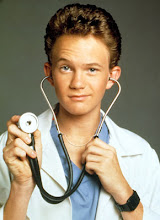
I just got alerted to a new admission, I go onto the computer, click to see what the issue is-- the computer tells me reason for admission: Patient deceased.
I call up the ICU to ask what's going on with this patient-- did someone put in the wrong code, why am I getting a patient who the computer says is already dead?
"Oh, it must be a mistake," the ICU tells me-- we'll check what happened and fix it. Ten minutes later I get paged again-- yeah, cancel that admission, the computer was right. Oops.
Tuesday, December 22, 2009
Monday, December 21, 2009
During rounds this morning, we were dealing with a patient with a grossly enlarged testicle, and the attending puts his stethoscope right on the thing, no sterile cover or anything. Next room, elderly woman, he puts the stethoscope right on her chest. Didn't clean it in between or anything.
I wanted to say something. Something like, "doctor, did you wipe that down?" but it's so hard to question anyone. It's different for something major-- I was reading one of the notes that an attending wrote on my patient, and noticed he didn't mention the potassium level, which had come back crazy high in the lab work. So I called him to make sure he saw that, and it turned out he hadn't, and we had to add a couple more pills into the mix. But in real-time, in person, it's hard to question an attending, especially when it's "just" about cleanliness and not about medication levels or something that you know is definitely going to mess up the patient.
But it gnawed at me for a couple of minutes, so I said something afterwards, phrased it like a question I didn't already know the answer to-- like, "I notice some docs are super-vigilant about the stethoscope, but it varies-- is it overkill to be cleaning it between each patient, or should we try and remember to do that, every time?" And he said, yeah, we should probably do that every time, but he forgets sometimes, and it's bad form. And he cleaned it before the next one. And then forgot before the one after that.
Even though it's been almost six months of this, it's still hard to wrap my head around how thin the line is between 'patient gets good treatment' and 'something goes wrong'. The rotation I'm on right now, there's a systems problem-- it's all private attendings, they see the patients, they write their notes, but there's no central coordination of anything. It's up to me and my resident to keep track of the notes, and to keep track of the overall patient management, but we don't actually make any decisions, and we don't always know who has seen the patient, if they don't write the note right away. We have a guy who's being seen by a couple of different specialists, and they keep entering conflicting orders-- give drug X, says one of them. Stop drug X, says the next. Next day, same thing-- give drug X, stop drug X. They don't talk to each other, and when we call to resolve the conflict, they're both happy to defer to the other one-- but we haven't yet resolved it. We gave it one day, we didn't give it the next, we don't know which doctor is right and neither do they.
I wanted to say something. Something like, "doctor, did you wipe that down?" but it's so hard to question anyone. It's different for something major-- I was reading one of the notes that an attending wrote on my patient, and noticed he didn't mention the potassium level, which had come back crazy high in the lab work. So I called him to make sure he saw that, and it turned out he hadn't, and we had to add a couple more pills into the mix. But in real-time, in person, it's hard to question an attending, especially when it's "just" about cleanliness and not about medication levels or something that you know is definitely going to mess up the patient.
But it gnawed at me for a couple of minutes, so I said something afterwards, phrased it like a question I didn't already know the answer to-- like, "I notice some docs are super-vigilant about the stethoscope, but it varies-- is it overkill to be cleaning it between each patient, or should we try and remember to do that, every time?" And he said, yeah, we should probably do that every time, but he forgets sometimes, and it's bad form. And he cleaned it before the next one. And then forgot before the one after that.
Even though it's been almost six months of this, it's still hard to wrap my head around how thin the line is between 'patient gets good treatment' and 'something goes wrong'. The rotation I'm on right now, there's a systems problem-- it's all private attendings, they see the patients, they write their notes, but there's no central coordination of anything. It's up to me and my resident to keep track of the notes, and to keep track of the overall patient management, but we don't actually make any decisions, and we don't always know who has seen the patient, if they don't write the note right away. We have a guy who's being seen by a couple of different specialists, and they keep entering conflicting orders-- give drug X, says one of them. Stop drug X, says the next. Next day, same thing-- give drug X, stop drug X. They don't talk to each other, and when we call to resolve the conflict, they're both happy to defer to the other one-- but we haven't yet resolved it. We gave it one day, we didn't give it the next, we don't know which doctor is right and neither do they.
Friday, December 18, 2009
I'm talking to a patient in his room when his cell phone rings. He puts his hand up for me to stop talking and takes the call. "Hello?" he says. "Yeah, yeah, what do you want? I'm talking to the male nurse." He has a thirty-second conversation and then hangs up.
"Sir, I'm actually a doctor, not a nurse."
"I thought the other guy was the doctor."
"Yeah, we're both doctors."
"It seems like you do all the nurse stuff."
Four years of medical school, for this? I'm wearing a white coat. I have a stethoscope. What more can I do to look like the doctor?
My attending got a little annoyed at me today. A patient's brother asked why we'd stopped doing a certain treatment on the patient, and I said the attending decided it wasn't necessary. The brother wanted to know why, and saw the attending standing right outside the door-- so he went over and asked him.
The attending pulls me aside afterwards-- "why did you send that family member after me?"
"I didn't-- he was just asking--"
"Don't tell these people any more than you have to. They don't need to know our decision-making process. All they need to know is we're doing everything we can for the patient. I don't want anyone questioning what we're doing--"
"He asked specifically about that treatment--"
"And you tell him it's no longer the right treatment and you leave it at that. You don't say I decided something, or anyone decided anything. It's no longer the treatment. That's it. No questions. It's not our job to explain ourselves."
I mean, this guy is a good attending, and I think he's sort of right-- we don't want to explain every decision to every family member-- but when asked a real question I think they're entitled to a real answer, and to know what's going on. Even if it takes thirty seconds out of our day.
But I'm sure I will soon be jaded and sick of talking to family members and want to do everything I can to brush them off, like a real doctor.
"Sir, I'm actually a doctor, not a nurse."
"I thought the other guy was the doctor."
"Yeah, we're both doctors."
"It seems like you do all the nurse stuff."
Four years of medical school, for this? I'm wearing a white coat. I have a stethoscope. What more can I do to look like the doctor?
My attending got a little annoyed at me today. A patient's brother asked why we'd stopped doing a certain treatment on the patient, and I said the attending decided it wasn't necessary. The brother wanted to know why, and saw the attending standing right outside the door-- so he went over and asked him.
The attending pulls me aside afterwards-- "why did you send that family member after me?"
"I didn't-- he was just asking--"
"Don't tell these people any more than you have to. They don't need to know our decision-making process. All they need to know is we're doing everything we can for the patient. I don't want anyone questioning what we're doing--"
"He asked specifically about that treatment--"
"And you tell him it's no longer the right treatment and you leave it at that. You don't say I decided something, or anyone decided anything. It's no longer the treatment. That's it. No questions. It's not our job to explain ourselves."
I mean, this guy is a good attending, and I think he's sort of right-- we don't want to explain every decision to every family member-- but when asked a real question I think they're entitled to a real answer, and to know what's going on. Even if it takes thirty seconds out of our day.
But I'm sure I will soon be jaded and sick of talking to family members and want to do everything I can to brush them off, like a real doctor.
Wednesday, December 16, 2009
We have a patient who, somehow, in the hospital, lost his dentures.
"I heard you lost your teeth," I asked. "How'd that happen?"
"Oh, one at a time, over the years."
"I'm sorry, I didn't mean your real teeth. I meant your dentures."
[He feels his gums with his tongue.]
"Oh, I guess you're right. I have no idea."
Another patient, showed up to clinic. I look at his chart and see that last time he came in because he was bleeding from his penis whenever he ejaculated, which made me very excited to find out what was bringing him back here.
"I have a stuffed nose, doc."
"That's it?"
"Yep."
"Okay, great. How long has it been feeling stuffed?"
"Four or five years."
"Do you think it might be allergies."
"Oh, I was on allergy medication for a while, but I stopped it recently, and my nose became stuffed again. So I don't think it's that."
"I'm sorry, run your logic by me again?"
"I took the allergy medication, but when I stopped taking it, my nose became stuffed again. So it didn't fix anything-- it must not be allergies."
"No, the medication doesn't cure allergies, it just treats them. So when you stop taking it, the allergies come back."
"Then what's the point of the medication if it doesn't do anything?"
"It takes the allergy symptoms away, as long as you take the medication. It works as long as you continue taking it."
"So I have to take it forever?"
"As long as you want the symptoms to go away, I'm afraid you do."
"That's ridiculous."
"I'm sorry, sir. That's how the medication works."
"You mean that's how it doesn't work."
"If you want to think of it that way, I'm not going to argue with you."
"Oh, and also, there's another problem with my penis--"
"I heard you lost your teeth," I asked. "How'd that happen?"
"Oh, one at a time, over the years."
"I'm sorry, I didn't mean your real teeth. I meant your dentures."
[He feels his gums with his tongue.]
"Oh, I guess you're right. I have no idea."
Another patient, showed up to clinic. I look at his chart and see that last time he came in because he was bleeding from his penis whenever he ejaculated, which made me very excited to find out what was bringing him back here.
"I have a stuffed nose, doc."
"That's it?"
"Yep."
"Okay, great. How long has it been feeling stuffed?"
"Four or five years."
"Do you think it might be allergies."
"Oh, I was on allergy medication for a while, but I stopped it recently, and my nose became stuffed again. So I don't think it's that."
"I'm sorry, run your logic by me again?"
"I took the allergy medication, but when I stopped taking it, my nose became stuffed again. So it didn't fix anything-- it must not be allergies."
"No, the medication doesn't cure allergies, it just treats them. So when you stop taking it, the allergies come back."
"Then what's the point of the medication if it doesn't do anything?"
"It takes the allergy symptoms away, as long as you take the medication. It works as long as you continue taking it."
"So I have to take it forever?"
"As long as you want the symptoms to go away, I'm afraid you do."
"That's ridiculous."
"I'm sorry, sir. That's how the medication works."
"You mean that's how it doesn't work."
"If you want to think of it that way, I'm not going to argue with you."
"Oh, and also, there's another problem with my penis--"
Monday, December 14, 2009
I'm getting sick. Which sucks for me, and sucks for my patients, since I'm not sick enough that anyone's going to actually want me to stay home, but I'm totally sick enough that I feel like I'm sleepwalking through the day. I don't think it's anything real-- right now I'm just a little sniffly and there's a little scratchiness in my throat-- but it's still hard to be "on" for 12 hours in a row when all I want to do is lie down and take a nap.
Today was my first day of the new rotation, which is a relief because if I had to spend one more day where I was, I think I was going to jump out the window. On Friday I was at the hospital until midnight, and it wasn't much better on Saturday. We had one patient who came out of surgery and started acting psychotic. We didn't know what was going on, ran a whole battery of tests, called in the attending, thought he was having a reaction to something, that maybe something serious was going on... and then he had a moment of lucidity and told us he forgot to mention he was on a couple of medications that we didn't know about and hadn't given him... and so this was just withdrawal from those. Awesome. When you're in the hospital, please tell your doctors all the medicine you take and not just some of it. Otherwise we think we've done something wrong when really you're just a moron.
The new rotation seems better. Different hospital-- private instead of public; my first time doing a rotation at this one. There's a big difference as far as the nursing staff. It's really quite crazy. I didn't realize there would be such a difference, but these nurses actually know things, and actually do things. One of them entered the patients' overnight lab results before I got in-- I was floored. They know what lab results are? They know how to use the computer system? Incredible. Not to disparage the nurses at the other hospital, because, hey, they've probably just never been told to do any of this stuff, and are short-staffed and some of them work hard, but it's night and day. They actually hire enough nurses here, with enough training and education, that they seem truly helpful. Maybe I'll be able to go a whole month without having to collect any urine samples on my own. I can dream, can't I?
Today was my first day of the new rotation, which is a relief because if I had to spend one more day where I was, I think I was going to jump out the window. On Friday I was at the hospital until midnight, and it wasn't much better on Saturday. We had one patient who came out of surgery and started acting psychotic. We didn't know what was going on, ran a whole battery of tests, called in the attending, thought he was having a reaction to something, that maybe something serious was going on... and then he had a moment of lucidity and told us he forgot to mention he was on a couple of medications that we didn't know about and hadn't given him... and so this was just withdrawal from those. Awesome. When you're in the hospital, please tell your doctors all the medicine you take and not just some of it. Otherwise we think we've done something wrong when really you're just a moron.
The new rotation seems better. Different hospital-- private instead of public; my first time doing a rotation at this one. There's a big difference as far as the nursing staff. It's really quite crazy. I didn't realize there would be such a difference, but these nurses actually know things, and actually do things. One of them entered the patients' overnight lab results before I got in-- I was floored. They know what lab results are? They know how to use the computer system? Incredible. Not to disparage the nurses at the other hospital, because, hey, they've probably just never been told to do any of this stuff, and are short-staffed and some of them work hard, but it's night and day. They actually hire enough nurses here, with enough training and education, that they seem truly helpful. Maybe I'll be able to go a whole month without having to collect any urine samples on my own. I can dream, can't I?
Thursday, December 10, 2009
Another late night.
I don't know why the hours this month have been so much longer than previously. The job isn't any different. I think the whole team, on any particular rotation, is forced to operate however the resident operates. If he doesn't mind staying late, everything is going to happen later in the day and everyone's going to be stuck there. If he wants to leave early, he'll push everyone to get their work done, and everyone will get to leave. The problem is when there's a mismatch between how many hours the intern wants to work and how many hours the resident doesn't mind being there.
It makes me feel like I'm lazy. It makes me feel like this is the wrong career for me. Everyone else wants to be here, it seems. They check in from home. They think about the patients after they leave. They want to follow up. They're interested in what's going on. They genuinely don't mind spending every waking hour in the hospital.
I'm not like that, and I don't know why. It's not as if I have anything waiting for me at home, I just don't want to spend 15 hours at work. I'm not interested in the patients, honestly. Someone comes in and my first thought isn't about how I can make him better, it's about whether he's going to make me stay even later. Test results come back and I want them to be normal not because I want the patient to be okay but because I don't want to have to do anything. I want patients to leave. Someone tells me my patient died, I think, great, one less patient. I don't care. If it was a member of my family, I would care. If it was a friend, I would care. If it's someone who's dying anyway, I don't know that I care.
Okay, I'm a broken record this week. Something lighter. I had to extract a stool sample from a patient today. My co-intern came along to watch (!!). No, I don't know why she wanted to watch. She said to me, "you don't seem to like doing procedures." No, I don't! I don't want to get dirty. I don't want to use my hands. This is why I want to do primary care and not surgery. I don't want to extract stool. I don't want to see stool. I don't want to touch the insides of anyone.
...and that is why I'm going to make no money. Because insurance pays for procedures, and I don't want to do any. I just want to chat with my patients, get to know their life stories, and pass them along to a specialist who can extract their stool instead of me.
I don't know why the hours this month have been so much longer than previously. The job isn't any different. I think the whole team, on any particular rotation, is forced to operate however the resident operates. If he doesn't mind staying late, everything is going to happen later in the day and everyone's going to be stuck there. If he wants to leave early, he'll push everyone to get their work done, and everyone will get to leave. The problem is when there's a mismatch between how many hours the intern wants to work and how many hours the resident doesn't mind being there.
It makes me feel like I'm lazy. It makes me feel like this is the wrong career for me. Everyone else wants to be here, it seems. They check in from home. They think about the patients after they leave. They want to follow up. They're interested in what's going on. They genuinely don't mind spending every waking hour in the hospital.
I'm not like that, and I don't know why. It's not as if I have anything waiting for me at home, I just don't want to spend 15 hours at work. I'm not interested in the patients, honestly. Someone comes in and my first thought isn't about how I can make him better, it's about whether he's going to make me stay even later. Test results come back and I want them to be normal not because I want the patient to be okay but because I don't want to have to do anything. I want patients to leave. Someone tells me my patient died, I think, great, one less patient. I don't care. If it was a member of my family, I would care. If it was a friend, I would care. If it's someone who's dying anyway, I don't know that I care.
Okay, I'm a broken record this week. Something lighter. I had to extract a stool sample from a patient today. My co-intern came along to watch (!!). No, I don't know why she wanted to watch. She said to me, "you don't seem to like doing procedures." No, I don't! I don't want to get dirty. I don't want to use my hands. This is why I want to do primary care and not surgery. I don't want to extract stool. I don't want to see stool. I don't want to touch the insides of anyone.
...and that is why I'm going to make no money. Because insurance pays for procedures, and I don't want to do any. I just want to chat with my patients, get to know their life stories, and pass them along to a specialist who can extract their stool instead of me.
Tuesday, December 8, 2009
Yesterday was my latest night at the hospital since I've been on the day shift. I got there at 6:45 and didn't step out the door until 10:33 at night. (And back before 7 this morning.) I am so happy this rotation will be over this weekend. Not that there's any reason to think the next one will be any better-- and in fact I've heard it's worse-- but somehow the combination of this hospital and my patients and my team and these nurses has just made the whole thing so much harder than it should be.
What kept me so late was a patient with a fever, and an overworked nursing staff that is poorly synchronized with the doctor shifts. The nurses shouldn't have their shift handoffs an hour after the doctors do, it just shouldn't work that way. We're allowed to start handing patients over to the night team at 6, and the nurses change shifts at 7. In theory, I understand why this is supposed to work-- if the doctors are all ready to make their shift change at 6, then the night team is already set up with the patients by the time the nurses change, and there shouldn't be a lag. But, for the most part, the doctors are never really ready at 6. If nothing's going wrong, we're done at 6. But if anything's happening with any of our patients, we can't sign out, we have to do whatever we need to do to get the patient stable, run whatever tests, wait for whatever results, start whatever new medications.
So at 6:00, as I'm hoping to get to sign out, we realize my patient has a fever, and I need to order a urinalysis. I ask the nurse. She says she has other things she has to do before her shift is done, and she won't do it. I had an admission to deal with, so I figured I would just wait until 7 and grab the new nurse. By the time I find her at 7:15, she's already been given a list of half a dozen things to do, and says she'll get to the urinalysis when she can. At this point, I figured I'd just do it myself. Except we discovered the patient was incontinent and urinating all over herself. We needed to put in a catheter. I've never done this on my own. I waited for another intern to be free enough to help. We put in the catheter. I got the urine sample. It's 9:00 at this point. I bring it to the lab. And of course by 9:00 everything is working in slow-motion. I wait an hour for them to "rush" the results. And by the time I then do what I need to do and sign out, it's after 10.
I understand why we have to wait for test results, and can't just sign it over to the night team, I guess. I mean, I was on nights, I know what it's like to have 75 patients under your care and how annoying it is when a doctor leaves you someone who needs follow-up. It's enough that you have to deal with the emergencies that come up, but to have patients who you already know are going to take your attention, it makes it too much for the night person to have to deal with. But then there should be extra support at the transition period -- there should be an overlap so nurses can help get things done and help get the day doctors out at a normal time. Or the shift shouldn't end at that point, it should end two hours earlier, so the new nurses have time to get situated before the rush that needs to happen to get the day team out of there.
I don't know why I'm trying to explain this, and why I'm fixated on this systemic problem. I'm just grumpy that I had to be there so late, and I want to believe there's a way to fix it instead of being forced to admit that, hey, these are sick people and sometimes things happen, and for the next two and a half years there are going to be weeks like this, there are going to be nights I'm there for hours, trying to get someone's urine in a container so I can take it to the lab.
I ran into the attending from a previous rotation, and he told me one of my patients just died. Is it wrong that I don't feel too sad about it? This patient treated everyone poorly, treated his family poorly, and basically drank himself to death. Has this job made me so jaded that I feel nothing for him? That I'm not fazed in the least? I hope I'm still human. Gosh, this week sucks.
What kept me so late was a patient with a fever, and an overworked nursing staff that is poorly synchronized with the doctor shifts. The nurses shouldn't have their shift handoffs an hour after the doctors do, it just shouldn't work that way. We're allowed to start handing patients over to the night team at 6, and the nurses change shifts at 7. In theory, I understand why this is supposed to work-- if the doctors are all ready to make their shift change at 6, then the night team is already set up with the patients by the time the nurses change, and there shouldn't be a lag. But, for the most part, the doctors are never really ready at 6. If nothing's going wrong, we're done at 6. But if anything's happening with any of our patients, we can't sign out, we have to do whatever we need to do to get the patient stable, run whatever tests, wait for whatever results, start whatever new medications.
So at 6:00, as I'm hoping to get to sign out, we realize my patient has a fever, and I need to order a urinalysis. I ask the nurse. She says she has other things she has to do before her shift is done, and she won't do it. I had an admission to deal with, so I figured I would just wait until 7 and grab the new nurse. By the time I find her at 7:15, she's already been given a list of half a dozen things to do, and says she'll get to the urinalysis when she can. At this point, I figured I'd just do it myself. Except we discovered the patient was incontinent and urinating all over herself. We needed to put in a catheter. I've never done this on my own. I waited for another intern to be free enough to help. We put in the catheter. I got the urine sample. It's 9:00 at this point. I bring it to the lab. And of course by 9:00 everything is working in slow-motion. I wait an hour for them to "rush" the results. And by the time I then do what I need to do and sign out, it's after 10.
I understand why we have to wait for test results, and can't just sign it over to the night team, I guess. I mean, I was on nights, I know what it's like to have 75 patients under your care and how annoying it is when a doctor leaves you someone who needs follow-up. It's enough that you have to deal with the emergencies that come up, but to have patients who you already know are going to take your attention, it makes it too much for the night person to have to deal with. But then there should be extra support at the transition period -- there should be an overlap so nurses can help get things done and help get the day doctors out at a normal time. Or the shift shouldn't end at that point, it should end two hours earlier, so the new nurses have time to get situated before the rush that needs to happen to get the day team out of there.
I don't know why I'm trying to explain this, and why I'm fixated on this systemic problem. I'm just grumpy that I had to be there so late, and I want to believe there's a way to fix it instead of being forced to admit that, hey, these are sick people and sometimes things happen, and for the next two and a half years there are going to be weeks like this, there are going to be nights I'm there for hours, trying to get someone's urine in a container so I can take it to the lab.
I ran into the attending from a previous rotation, and he told me one of my patients just died. Is it wrong that I don't feel too sad about it? This patient treated everyone poorly, treated his family poorly, and basically drank himself to death. Has this job made me so jaded that I feel nothing for him? That I'm not fazed in the least? I hope I'm still human. Gosh, this week sucks.
Friday, December 4, 2009
Whenever a male patient around my age comes into the clinic, my mind immediately jumps to one possibility, because that's all any guy my age ever goes to the clinic for.
"There's a problem with my penis."
Today, my fourth "problem with my penis" patient.
We tested him. I'm sure he has something.
"Have you had multiple partners?"
"No, only three or four."
"That's a yes, then."
"No, I've only had a few."
"Okay, that's fine. You should use protection."
"Oh, I try sometimes."
"Okay. You should try harder."
"Just fix my penis."
"There's a problem with my penis."
Today, my fourth "problem with my penis" patient.
We tested him. I'm sure he has something.
"Have you had multiple partners?"
"No, only three or four."
"That's a yes, then."
"No, I've only had a few."
"Okay, that's fine. You should use protection."
"Oh, I try sometimes."
"Okay. You should try harder."
"Just fix my penis."
Wednesday, December 2, 2009
Better today. It's weird, in the moment I feel like there are all these ups and downs, but really there shouldn't be. Each day is more or less the same, and whether I leave at 6:45 or 7:15 shouldn't mean the difference between feeling good and feeling awful. I have bad days, the people around me have bad days, but all in all it's okay. My resident isn't so terrible, I like most of the people I'm working with, my patients are not suffering at my hands, the days are long but it's okay.
Deep breath.
I did my first procedure yesterday. Drained some fluid from a patient's abdomen. He said I did good. Nevermind that he didn't really know what was going on and what I was doing to him. Felt good to feel competent at a procedure. I can do things, sometimes. If I was alone in the hospital, if I had no one to ask, no one to teach me, I could at least muddle through some simple things and not kill my patients. That's a nice feeling, I guess. Makes me feel like one day I might be okay at this. In clinic, I saw 5 patients in an afternoon, which is the most I've gotten through so far. The attendings see 10 or 12 in an afternoon, but 5 isn't bad. Two patients asked for my card (as if I have one...), asked if I was new, asked if I can be their doctor next time they come. So that was nice.
And this morning, no new overnight admissions. Maybe it'll be a short day. Maybe it won't be. I don't know. No one knows. I treated myself to a $6.00 piece of pumpkin pie on the way home last night, from a bakery that's too expensive and not as it good as it thinks it is. Little things. Little moments. I'm trying.
Deep breath.
I did my first procedure yesterday. Drained some fluid from a patient's abdomen. He said I did good. Nevermind that he didn't really know what was going on and what I was doing to him. Felt good to feel competent at a procedure. I can do things, sometimes. If I was alone in the hospital, if I had no one to ask, no one to teach me, I could at least muddle through some simple things and not kill my patients. That's a nice feeling, I guess. Makes me feel like one day I might be okay at this. In clinic, I saw 5 patients in an afternoon, which is the most I've gotten through so far. The attendings see 10 or 12 in an afternoon, but 5 isn't bad. Two patients asked for my card (as if I have one...), asked if I was new, asked if I can be their doctor next time they come. So that was nice.
And this morning, no new overnight admissions. Maybe it'll be a short day. Maybe it won't be. I don't know. No one knows. I treated myself to a $6.00 piece of pumpkin pie on the way home last night, from a bakery that's too expensive and not as it good as it thinks it is. Little things. Little moments. I'm trying.
Monday, November 30, 2009
I don't know what's wrong with me today. I don't know if it's working the past three days, when everyone else on the planet was home, eating leftovers and napping on the couch. I don't know if it's this slow, boring hospital where nothing is urgent and no one gets better and we're basically babysitting the demented. I don't know if it's my resident, who makes me feel like an idiot about fifty times a day.
I admit, I try to leave as early as I can leave. I try to do my work quickly, I try to push the lab to get me the results I'm waiting for, I try to move things along as much as I can so that once night float gets here, I'm not lingering for hours, finishing things up. We work 12 hour days. I get home and I have two hours before I have to go to sleep, to start again the next morning. I don't think it's so terrible that I don't want to be in the hospital any more time than I have to be. I don't think it's so terrible that I want to leave when I'm allowed to leave. Night float exists so the day team can go home. We're not supposed to be there twenty-four hours a day. We're supposed to get our work done, hand our patients off, and go home. For a couple of hours to eat dinner and watch half an episode of Law and Order and then get a full night's sleep so we can be functional the next day. I'm not missing things, I'm not leaving my patients in the lurch, I'm doing everything I need to do. I just happen to do it faster than some people, and so I leave earlier than some people. Some people just don't seem to mind if they're there until 10:00 and then back at work at 7 the next morning. I do. I don't want to be there at 10:00 if I don't have to.
So maybe it makes me want to scream when my resident pulls me aside this morning and says,
"Hey, you know, you have to expect that when you're on floors, you're going to be here late. You're gonna go over the hours limits. You're gonna pull 14, 15 hours days. That's just what you have to expect."
No. Why should I have to expect to be here every single one of my waking hours if nothing's going on? My patients are stable. Or they're dead. Stable or dead, I can't help them. And if something happens to them at midnight, hey, it's not my fault. I'm not supposed to be here. That's why there's a night team. If we don't make ourselves leave, we're never going to leave. There are always new patients, you can always check in one more time. But that's not the job. There's an hours limit for a reason. I can't function on 6 hours of sleep. I can't really function on 7 hours of sleep, but I do.
If there was something interesting going on, if I felt like I was part of something important, something that mattered-- then maybe. Maybe then I wouldn't feel so burdened to stay 16 hours a day. And maybe that's the problem-- maybe the fact that this place is where they throw the leftover patients, who we can't do anything for, who are just circling the drain-- maybe the fact that it feels like a morgue in here is why I don't want to be here longer than I have to. Maybe if I ever got to think without my resident standing over me. Maybe if I ever got to feel valued instead of tortured, it would be less of an ordeal to be here.
I go back and forth in my head-- does it depend on the team, and if you like everyone on the team, work can sort of be fun? Does it depend on the patients, and if you think you're actually helping, then work can sort of be rewarding? Does it depend on the hours, and no one can really be here, alert, for as long as we're expected to, for as many days in a row as we're expected to?
I don't know, I think it's a combination of all of that. But to be made to feel like my 12 hours aren't enough, like wanting to leave is a crime, like I'm a bad doctor because I get my work done and don't want to be here forever-- well, that sucks. That sucks and frankly makes me want to cry, because I'm trying really hard and I think I'm doing okay, and to be told that that isn't good enough and to feel like my resident thinks I'm lazy when I'm actually just trying my hardest to be efficient and not be here all night. Well, I don't know how to do two more weeks of this. At least it's two and not four, and then I'm on another team, in another hospital.
My resident is coming back from the bathroom. I hear her berating a nurse in the hall. If she yells at me one more time to check a result I've already checked--
I admit, I try to leave as early as I can leave. I try to do my work quickly, I try to push the lab to get me the results I'm waiting for, I try to move things along as much as I can so that once night float gets here, I'm not lingering for hours, finishing things up. We work 12 hour days. I get home and I have two hours before I have to go to sleep, to start again the next morning. I don't think it's so terrible that I don't want to be in the hospital any more time than I have to be. I don't think it's so terrible that I want to leave when I'm allowed to leave. Night float exists so the day team can go home. We're not supposed to be there twenty-four hours a day. We're supposed to get our work done, hand our patients off, and go home. For a couple of hours to eat dinner and watch half an episode of Law and Order and then get a full night's sleep so we can be functional the next day. I'm not missing things, I'm not leaving my patients in the lurch, I'm doing everything I need to do. I just happen to do it faster than some people, and so I leave earlier than some people. Some people just don't seem to mind if they're there until 10:00 and then back at work at 7 the next morning. I do. I don't want to be there at 10:00 if I don't have to.
So maybe it makes me want to scream when my resident pulls me aside this morning and says,
"Hey, you know, you have to expect that when you're on floors, you're going to be here late. You're gonna go over the hours limits. You're gonna pull 14, 15 hours days. That's just what you have to expect."
No. Why should I have to expect to be here every single one of my waking hours if nothing's going on? My patients are stable. Or they're dead. Stable or dead, I can't help them. And if something happens to them at midnight, hey, it's not my fault. I'm not supposed to be here. That's why there's a night team. If we don't make ourselves leave, we're never going to leave. There are always new patients, you can always check in one more time. But that's not the job. There's an hours limit for a reason. I can't function on 6 hours of sleep. I can't really function on 7 hours of sleep, but I do.
If there was something interesting going on, if I felt like I was part of something important, something that mattered-- then maybe. Maybe then I wouldn't feel so burdened to stay 16 hours a day. And maybe that's the problem-- maybe the fact that this place is where they throw the leftover patients, who we can't do anything for, who are just circling the drain-- maybe the fact that it feels like a morgue in here is why I don't want to be here longer than I have to. Maybe if I ever got to think without my resident standing over me. Maybe if I ever got to feel valued instead of tortured, it would be less of an ordeal to be here.
I go back and forth in my head-- does it depend on the team, and if you like everyone on the team, work can sort of be fun? Does it depend on the patients, and if you think you're actually helping, then work can sort of be rewarding? Does it depend on the hours, and no one can really be here, alert, for as long as we're expected to, for as many days in a row as we're expected to?
I don't know, I think it's a combination of all of that. But to be made to feel like my 12 hours aren't enough, like wanting to leave is a crime, like I'm a bad doctor because I get my work done and don't want to be here forever-- well, that sucks. That sucks and frankly makes me want to cry, because I'm trying really hard and I think I'm doing okay, and to be told that that isn't good enough and to feel like my resident thinks I'm lazy when I'm actually just trying my hardest to be efficient and not be here all night. Well, I don't know how to do two more weeks of this. At least it's two and not four, and then I'm on another team, in another hospital.
My resident is coming back from the bathroom. I hear her berating a nurse in the hall. If she yells at me one more time to check a result I've already checked--
Friday, November 27, 2009
In the hospital early this morning to round on my patients, hoping to get out of here by lunchtime-- was lucky enough to have Thanksgiving off, which means I'm working the next three days. I came back into the call room pretty pleased with myself after visiting my first patient, told my resident--
Me: "Mr. Smith just said he thinks I'm a terrific doctor."
Resident: "You do realize Mr. Smith is demented, right?"
Thanks. Thanks for killing my one moment of good feeling at six in the morning. Of course I know Mr. Smith is demented, but that doesn't mean he can't be right sometimes. So what if he thinks it's 1975 and Nixon is the President (...which he wasn't anymore in 1975, so besides having no idea what year it is, Mr. Smith also apparently didn't read the newspaper back in the '70s...), he can still think I'm a good doctor.
Me: "Mr. Smith just said he thinks I'm a terrific doctor."
Resident: "You do realize Mr. Smith is demented, right?"
Thanks. Thanks for killing my one moment of good feeling at six in the morning. Of course I know Mr. Smith is demented, but that doesn't mean he can't be right sometimes. So what if he thinks it's 1975 and Nixon is the President (...which he wasn't anymore in 1975, so besides having no idea what year it is, Mr. Smith also apparently didn't read the newspaper back in the '70s...), he can still think I'm a good doctor.
Wednesday, November 25, 2009
The hospital is a terrible place to be during a holiday week.
Nothing's getting done. Administrators are out, technicians are out, attendings are out. Sure, some people are here, and on call, and emergencies can get taken care of (slowly), but for the most part, everything is at half-speed. There were a tremendous number of discharges last Friday. There have been a lot fewer since. Illness doesn't know it's a holiday-- but you wouldn't realize that from walking the floors. You simply don't want to be in a hospital over Thanksgiving, if you have a choice. Which, of course, very few people do.
The hospital is also a terrible place to be during a non-holiday week.
I don't know, last month I felt like I had some interesting patients, some of the work was okay, I wasn't hating it so much. This month I'm in the bad hospital, where everyone's basically a nursing home patient taking up space for no legitimate medical reason, I don't have enough to do, and so I end up sitting in the call room for hours of the day, alone, surfing the Internet and intermittently checking on lab results. No one thinks of a doctor as having down time, as being bored, but a lot of the time that's what this is. You don't need a medical degree to do most of what I'm doing, you don't even need a high school degree. It's dull. But this is what a hospital-based attending does, a lot of the time, at least at a place like this where nothing cutting-edge is going on, where interesting cases are transferred away to somewhere better, or at least sent to a specialist. Maybe everyone is right. Maybe general internal medicine is just a dull profession. Not that I want to be dealing with the same organ all day as a specialist, and see two or three different problems 98% of the time. I don't know. I also don't want to work the hours of a surgeon. I have some friends who are jealous that at least I have a path, I have a future, I know what I'm doing with my life. But I'm jealous they still have choices, they still have a chance to end up doing something that feels more important than this. Yes, on good days being a doctor feels important. But today, in a half-empty hospital, twiddling my thumbs, it feels pretty pointless.
Nothing's getting done. Administrators are out, technicians are out, attendings are out. Sure, some people are here, and on call, and emergencies can get taken care of (slowly), but for the most part, everything is at half-speed. There were a tremendous number of discharges last Friday. There have been a lot fewer since. Illness doesn't know it's a holiday-- but you wouldn't realize that from walking the floors. You simply don't want to be in a hospital over Thanksgiving, if you have a choice. Which, of course, very few people do.
The hospital is also a terrible place to be during a non-holiday week.
I don't know, last month I felt like I had some interesting patients, some of the work was okay, I wasn't hating it so much. This month I'm in the bad hospital, where everyone's basically a nursing home patient taking up space for no legitimate medical reason, I don't have enough to do, and so I end up sitting in the call room for hours of the day, alone, surfing the Internet and intermittently checking on lab results. No one thinks of a doctor as having down time, as being bored, but a lot of the time that's what this is. You don't need a medical degree to do most of what I'm doing, you don't even need a high school degree. It's dull. But this is what a hospital-based attending does, a lot of the time, at least at a place like this where nothing cutting-edge is going on, where interesting cases are transferred away to somewhere better, or at least sent to a specialist. Maybe everyone is right. Maybe general internal medicine is just a dull profession. Not that I want to be dealing with the same organ all day as a specialist, and see two or three different problems 98% of the time. I don't know. I also don't want to work the hours of a surgeon. I have some friends who are jealous that at least I have a path, I have a future, I know what I'm doing with my life. But I'm jealous they still have choices, they still have a chance to end up doing something that feels more important than this. Yes, on good days being a doctor feels important. But today, in a half-empty hospital, twiddling my thumbs, it feels pretty pointless.
Monday, November 23, 2009
The rotation I'm on right now is a little too slow. I know, they're either too busy or too slow, there's never anything in between that's just right. I told the med student who's on my team to bring a book, there's just nothing to do. I have seven patients, but only two of them should even be in the hospital, the rest should be in a nursing home. I passed a patient lying on a gurney in the hall. He moaned, "am I on your list?" I said he wasn't. "People go to this place to die," he said, as I went to check his chart. No one had written a note on him in two days. I don't know whose patient he is or why they left him in the hall. I found his room, took him back, paged the resident who'd last seen him--
It's bizarre to go to the different hospitals in the system and realize the differences. Same doctors rotating through, but a different facility, different patient population, and different standards. If you need a scan here, it has to be a Monday or Thursday or it's not happening. Scans happen on Mondays and Thursdays. You need it on Tuesday, you're probably waiting until Thursday, emergency or not.
I went into one patient's room, I'm asking him about how he's doing-- and his roommate answers from behind the curtain. "I'm talking to Mr. [Patient], your doctor will be with you later." No matter, he just kept talking. I ask the guy how long he's been married. The roommate answers. I ask how his leg is feeling. The roommate answers. This would be merely annoying, except-- the patient has dementia and we haven't gotten a real answer from him since he came in. Somehow, he must have had a few moments of lucidity and had some sort of wide-ranging conversation with his roommate, where he told him about his family, about his medical problems, about his hobbies-- the roommate knew everything, we don't know anything, we've never been able to get a sensible answer out of this patient.
I have one patient, an African-American guy-- I feel bad for him-- he knows what year it is, he can count to ten, he knows the alphabet-- but he doesn't know who the President is, and when I say Obama, he just stares blankly, it doesn't ring a bell. He's probably been waiting 80 years for a black president, and now that we have one, he doesn't even know it. I know the mind doesn't work this way, but you'd hope something like that would have stuck. It's unfortunate.
It's bizarre to go to the different hospitals in the system and realize the differences. Same doctors rotating through, but a different facility, different patient population, and different standards. If you need a scan here, it has to be a Monday or Thursday or it's not happening. Scans happen on Mondays and Thursdays. You need it on Tuesday, you're probably waiting until Thursday, emergency or not.
I went into one patient's room, I'm asking him about how he's doing-- and his roommate answers from behind the curtain. "I'm talking to Mr. [Patient], your doctor will be with you later." No matter, he just kept talking. I ask the guy how long he's been married. The roommate answers. I ask how his leg is feeling. The roommate answers. This would be merely annoying, except-- the patient has dementia and we haven't gotten a real answer from him since he came in. Somehow, he must have had a few moments of lucidity and had some sort of wide-ranging conversation with his roommate, where he told him about his family, about his medical problems, about his hobbies-- the roommate knew everything, we don't know anything, we've never been able to get a sensible answer out of this patient.
I have one patient, an African-American guy-- I feel bad for him-- he knows what year it is, he can count to ten, he knows the alphabet-- but he doesn't know who the President is, and when I say Obama, he just stares blankly, it doesn't ring a bell. He's probably been waiting 80 years for a black president, and now that we have one, he doesn't even know it. I know the mind doesn't work this way, but you'd hope something like that would have stuck. It's unfortunate.
Saturday, November 21, 2009
In clinic yesterday--
Tiny Female Med Student, talking to patient: "You have an infection in your scrotum."
Patient: "My what?"
Tiny Female Med Student: "An infection in your scrotum"
Patient: "What is a scroat-um?"
Tiny Female Med Student: "You have an infection in your ball sac, sir."
Patient: "Oh. Well why didn't you say so?"
Tiny Female Med Student, talking to patient: "You have an infection in your scrotum."
Patient: "My what?"
Tiny Female Med Student: "An infection in your scrotum"
Patient: "What is a scroat-um?"
Tiny Female Med Student: "You have an infection in your ball sac, sir."
Patient: "Oh. Well why didn't you say so?"
Thursday, November 19, 2009
I got evaluated for the first time yesterday. Theoretically, each attending and resident I work with is supposed to file an evaluation, but very few people actually do. Everyone works with so many residents and attendings, and the form is so long, that actually filling them out for everyone would take all day. Which certainly means the system is broken, because we ought to get evaluated more than we do. But I can't fix the system, all I can do is check it three times a week to see if anyone said anything about me. And, finally, someone did.
My attending from the last rotation evaluated me, and I did okay. It's not a verbose evaluation. "[name] showed competence with patient care." "[name] wrote competent notes." "[name] performed his tasks competently." Competence is apparently this attending's favorite adjective. On a scale from one to seven (I don't know why that's the scale), I got mostly 4s and 5s. A couple of 6s, and one 3. I got a 3 in "demonstrates proficiency in assimilating material from research studies into patient care." The attending had asked me two separate times about any studies that backed up some treatment plan I was recommending, and I didn't have an answer each time. I guess he remembered. I can live with that.
I got a 6 on "displays sensitivity and respect to the needs of the patients" and also on "is aware of own limitations, takes advice gracefully, and uses this information for growth and education." I think that's a backhanded compliment. I know I don't know stuff. Great.
I asked another intern if she got any evaluations yet, and she said she got one and it was mostly 4s and 5s. So I guess I'm doing okay.
My attending from the last rotation evaluated me, and I did okay. It's not a verbose evaluation. "[name] showed competence with patient care." "[name] wrote competent notes." "[name] performed his tasks competently." Competence is apparently this attending's favorite adjective. On a scale from one to seven (I don't know why that's the scale), I got mostly 4s and 5s. A couple of 6s, and one 3. I got a 3 in "demonstrates proficiency in assimilating material from research studies into patient care." The attending had asked me two separate times about any studies that backed up some treatment plan I was recommending, and I didn't have an answer each time. I guess he remembered. I can live with that.
I got a 6 on "displays sensitivity and respect to the needs of the patients" and also on "is aware of own limitations, takes advice gracefully, and uses this information for growth and education." I think that's a backhanded compliment. I know I don't know stuff. Great.
I asked another intern if she got any evaluations yet, and she said she got one and it was mostly 4s and 5s. So I guess I'm doing okay.
Wednesday, November 18, 2009
My resident on the current rotation is constantly talking about "hazing" the interns. Yesterday, he prank called one of my colleagues, disguising his voice and pretending to be from the nurse's station. "Ah, yes, doctor, one of your patients is not breathing." And then he started to laugh. He sent another intern on a wild goose chase for test results that didn't exist. He hid another intern's stethoscope in a closet for two hours.
Maybe it's just me, a little stressed about the work, and a little worried that one of these days I'm going to screw up and accidentally kill someone-- but, really, is this appropriate hospital behavior? Shouldn't the goal be to help each other help the patients and not distract us from getting our work done and have us on edge about whether a problem is serious or it's just a joke that the resident is playing on us?
It's hard enough to deal with the fake patients they sprinkle into the clinic and the fake codes they call-- rehearsals for the real thing, training exercises. But at least those are pedagogical. At least the way to deal with those is simply to do our job and assume everyone is real-- and so when we stumble into a training exercise it's no big deal, we just treat it like everything else.
But there's something different between a training exercise and a practical joke, or a prank. I don't want to be worried that my resident is trying to confuse me, or even sabotage me. I don't want to be looking for my stethoscope when I need it, or getting freaked out about a patient falling out of bed when everything's fine and he's just trying to make his own life more interesting.
I also don't want to be the kind of intern who goes to the chief and tells her this guy is "hazing" us and I wish he wouldn't. I don't want to be the tattletale or the crybaby, I don't want to turn something into a big deal if it isn't, I don't want to make enemies. But I also hope he gets the swine flu and can't come to work for two weeks.
Maybe it's just me, a little stressed about the work, and a little worried that one of these days I'm going to screw up and accidentally kill someone-- but, really, is this appropriate hospital behavior? Shouldn't the goal be to help each other help the patients and not distract us from getting our work done and have us on edge about whether a problem is serious or it's just a joke that the resident is playing on us?
It's hard enough to deal with the fake patients they sprinkle into the clinic and the fake codes they call-- rehearsals for the real thing, training exercises. But at least those are pedagogical. At least the way to deal with those is simply to do our job and assume everyone is real-- and so when we stumble into a training exercise it's no big deal, we just treat it like everything else.
But there's something different between a training exercise and a practical joke, or a prank. I don't want to be worried that my resident is trying to confuse me, or even sabotage me. I don't want to be looking for my stethoscope when I need it, or getting freaked out about a patient falling out of bed when everything's fine and he's just trying to make his own life more interesting.
I also don't want to be the kind of intern who goes to the chief and tells her this guy is "hazing" us and I wish he wouldn't. I don't want to be the tattletale or the crybaby, I don't want to turn something into a big deal if it isn't, I don't want to make enemies. But I also hope he gets the swine flu and can't come to work for two weeks.
Monday, November 16, 2009
I have a patient whose family has abandoned him.
He's dying. Soon. There was apparently a meeting with the family last week, and they said they wanted him to stay in the hospital until he died, but the hospital said he can't, he has to go to another facility, a nursing home or somewhere that can handle hospice care, there's no more treatment, he's just taking up a bed, it's sad but he can't stay...
And so the family disappeared. They haven't been in to visit him since, they don't answer the phone, they ignored a registered letter, no one can reach them. They've left him to die, and now the hospital has to figure out what to do with him.
I don't know how some people live with themselves, I really don't.
On a brighter note, I learned about a new medical procedure today. We have a patient with an infection that's not healing, the patient is colonized with the infectious bacteria and needs the normal gut flora-- so they're thinking about doing a stool transplant. They said this on rounds and I did a double-take. A what? You're going to do what?
They're going to take a relative's stool, and transplant it.
How?
Oh, via the throat.
They're going to put someone's stool down this guy's throat.
Seriously. This is an actual medical procedure.
We did not learn about this in medical school.
And this was right before lunch, which, of course, made lunch extremely enjoyable.
He's dying. Soon. There was apparently a meeting with the family last week, and they said they wanted him to stay in the hospital until he died, but the hospital said he can't, he has to go to another facility, a nursing home or somewhere that can handle hospice care, there's no more treatment, he's just taking up a bed, it's sad but he can't stay...
And so the family disappeared. They haven't been in to visit him since, they don't answer the phone, they ignored a registered letter, no one can reach them. They've left him to die, and now the hospital has to figure out what to do with him.
I don't know how some people live with themselves, I really don't.
On a brighter note, I learned about a new medical procedure today. We have a patient with an infection that's not healing, the patient is colonized with the infectious bacteria and needs the normal gut flora-- so they're thinking about doing a stool transplant. They said this on rounds and I did a double-take. A what? You're going to do what?
They're going to take a relative's stool, and transplant it.
How?
Oh, via the throat.
They're going to put someone's stool down this guy's throat.
Seriously. This is an actual medical procedure.
We did not learn about this in medical school.
And this was right before lunch, which, of course, made lunch extremely enjoyable.
Saturday, November 14, 2009
Today was my last day of this rotation-- on Monday I switch hospitals, though the work will be much the same. Standard patient floors, six days a week. I was hoping I'd get out early today since it was my last day (so no new admissions), but I had to write my final notes for the next intern to know what's going on.
So many transitions from doctor to doctor, so many handoffs, so much potential for disaster.
One of my med students sent me a text thanking me for helping him out and being a good role model. I thought that was nice.
A couple of months ago, I thought, oh, it'll be great not to be the intern, it'll be great to be the second-year or the third-year, so I can delegate all the scut work to the intern. Now I'm realizing that even though we have to do a lot of the scut work, we also get to leave when we're done and don't have to stick around to supervise. There hasn't been a single day this month that I've left after my resident. My hours have been bad, but hers have been terrible. And she has the responsibility of not making mistakes, too. At least I have someone to check with. She has no one. It's all on her. Something goes wrong, it's on her. I don't want to be the resident, I really don't.
There was a piece in the New York Times yesterday about primary care, and how no one wants to go into it, the pay is low, the respect is low, the rewards are low.... I thought the piece sold primary care kinda short. In private practice, it's not as if the hours have to be any different from specialists-- you're setting office hours-- and if you think you're dealing with the same problems over and over again in primary care, well, how many problems is a dermatologist really dealing with? How many different problems is a cardiologist dealing with? Yes, the pay is lower-- hopefully reforms will change that-- but there's also the reward of getting to know your patients over time and being the person they think of as "doctor." I can't imagine being an anesthesiologist, never knowing your patients, sitting alone in the corner of the room manipulating machines, and only having anything to do when something has gone terribly wrong. I'll take primary care over that, I really will.
So many transitions from doctor to doctor, so many handoffs, so much potential for disaster.
One of my med students sent me a text thanking me for helping him out and being a good role model. I thought that was nice.
A couple of months ago, I thought, oh, it'll be great not to be the intern, it'll be great to be the second-year or the third-year, so I can delegate all the scut work to the intern. Now I'm realizing that even though we have to do a lot of the scut work, we also get to leave when we're done and don't have to stick around to supervise. There hasn't been a single day this month that I've left after my resident. My hours have been bad, but hers have been terrible. And she has the responsibility of not making mistakes, too. At least I have someone to check with. She has no one. It's all on her. Something goes wrong, it's on her. I don't want to be the resident, I really don't.
There was a piece in the New York Times yesterday about primary care, and how no one wants to go into it, the pay is low, the respect is low, the rewards are low.... I thought the piece sold primary care kinda short. In private practice, it's not as if the hours have to be any different from specialists-- you're setting office hours-- and if you think you're dealing with the same problems over and over again in primary care, well, how many problems is a dermatologist really dealing with? How many different problems is a cardiologist dealing with? Yes, the pay is lower-- hopefully reforms will change that-- but there's also the reward of getting to know your patients over time and being the person they think of as "doctor." I can't imagine being an anesthesiologist, never knowing your patients, sitting alone in the corner of the room manipulating machines, and only having anything to do when something has gone terribly wrong. I'll take primary care over that, I really will.
Thursday, November 12, 2009
For the past three days I've had a patient I've been trying to communicate with in my barely-existent Spanish. Tiene dolor? Dolor en la cabeza? I think I'm doing the patient a service-- my Spanish is poor enough it makes her laugh. Laughing is good. But it has made it hard to understand what is going on with the patient, and hard to be sure what is wrong with her and what we need to do. I tried to bring a translator in, and she said no, we were fine, I should keep talking.
Yesterday I go into her room to check on her, and she's talking to a nurse. In English. In perfect damn English. Three days she's making me speak my terrible Spanish, making me think this is the only way we can possibly communicate with each other. And all along, she speaks English. She speaks English. I asked her-- was this some sort of joke? Yep, she said. Thought it would be fun.
Would have been less fun if somehow we'd misunderstood each other and we'd started treating her for something she didn't have, or didn't treat her for something she did have. Gosh, she was risking her health and I was too naive to do anything about it.
It's hard enough to do some of this stuff when the patient isn't trying to deliberately trick the doctor. "Patient actually does speak English after all" is the most embarrassing patient note I've been forced to write so far.
Yesterday I go into her room to check on her, and she's talking to a nurse. In English. In perfect damn English. Three days she's making me speak my terrible Spanish, making me think this is the only way we can possibly communicate with each other. And all along, she speaks English. She speaks English. I asked her-- was this some sort of joke? Yep, she said. Thought it would be fun.
Would have been less fun if somehow we'd misunderstood each other and we'd started treating her for something she didn't have, or didn't treat her for something she did have. Gosh, she was risking her health and I was too naive to do anything about it.
It's hard enough to do some of this stuff when the patient isn't trying to deliberately trick the doctor. "Patient actually does speak English after all" is the most embarrassing patient note I've been forced to write so far.
Tuesday, November 10, 2009
One of my patients-- drug addict, alcoholic, smoker-- wanted to know if he could see a nutritionist. "Sure, but a balanced diet is the least of your problems, sir." "I'm not worried about that other stuff." "Well, you should be."
I've been trying very hard each morning not to be the last one there to let the night floats sign my patients back out to me. I know from my night float experience, it sucks to be waiting on someone at 7:10, 7:15, 7:20. I've been doing well at getting there at 7. Okay, 7:03. 7:05 this morning, but that was a toaster-related exception. I forgot to turn it on to make my Pop Tart. I know they're not healthy, but I like Pop Tarts. Not every day, but sometimes.
I had my clinic today. One of the patients came back to see me for a second time. Apparently asked for me by name when making her appointment. So that was nice. Unfortunately her issue was that she had a rash on her genitals, so it wasn't a very enjoyable visit.
We have another patient, hardly talking, been in bed for weeks, and my resident and I had to do a breast exam on her. So we basically molested a comatose woman in her bed. She moaned, sort of. It was creepy. Very uncomfortable.
I've been trying very hard each morning not to be the last one there to let the night floats sign my patients back out to me. I know from my night float experience, it sucks to be waiting on someone at 7:10, 7:15, 7:20. I've been doing well at getting there at 7. Okay, 7:03. 7:05 this morning, but that was a toaster-related exception. I forgot to turn it on to make my Pop Tart. I know they're not healthy, but I like Pop Tarts. Not every day, but sometimes.
I had my clinic today. One of the patients came back to see me for a second time. Apparently asked for me by name when making her appointment. So that was nice. Unfortunately her issue was that she had a rash on her genitals, so it wasn't a very enjoyable visit.
We have another patient, hardly talking, been in bed for weeks, and my resident and I had to do a breast exam on her. So we basically molested a comatose woman in her bed. She moaned, sort of. It was creepy. Very uncomfortable.
Sunday, November 8, 2009
I felt like a bad doctor today, or at least a lazy one. On weekend days when we're not on late call, we're allowed to leave whenever we're done, and in theory that can be as early as lunchtime. So I raced to get my work done this morning, hoping nothing would come up, hoping I could leave at noon and have the rest of the day off, hoping I wouldn't get any new patients assigned to me....
And then I got one patient's blood work back, and his hemoglobin was a little low. My reaction should have been, "oh, his hemoglobin is low, I should figure out why." Instead, my reaction was, "oh no, this is going to keep me here, it's probably nothing, maybe I can just ignore it." And I stood there for 90 seconds weighing what to do. A good doctor, or at least a conscientious doctor, shouldn't weigh what to do. A good doctor should just suck it up and deal with it and make sure there isn't a problem. Which is what I realized after the 90 seconds, and I went to see the patient, made sure nothing was wrong, checked in with the resident, and, okay, no one would have been harmed if I had done nothing, because he was fine, but obviously I would have felt terrible if I'd ignored it and it turned out to be something important.
So I'm about to sign out-- and then I get paged that one of my patients needed to be moved to the ICU. A good doctor would have stopped everything, gone over to deal with the patient, and wait for transport to come with the appropriate monitors to attach to him for transport. A bad doctor would have left and told the intern on late call to deal with it. And in between was me, who went to check the patient, realized the transport team was hours away from getting there and attaching all the monitors-- and so I just wheeled him to the ICU myself, hoped nothing bad would happen along the way, and then I could sign out and go.
On a normal day, at 1:00 everything is fine, you do what you have to do, you know you're there until at least 5:00 anyway, and usually later than that. But today I wanted my afternoon, I didn't want to wait two hours for transport, I wanted to leave. So I did what I had to do, and left. Should I have been more diligent, should I have double-checked everything? Probably. But there's always more you can do, there's always another patient to check on, there's always tests to order, test results to read, things you can do. We can't do everything. And sometimes you just need to decide this is a day when I'm going to do what I have to do and then leave. I was the first one on the team to leave. It's my pre-call day (I'm on late call tomorrow), so that's how it's supposed to work. And I didn't do anything wrong. I did my job. I still can't help but worry that a good doctor wouldn't be in such a rush to leave. A good doctor would want to stay. A good doctor would care more. Maybe.
And then I got one patient's blood work back, and his hemoglobin was a little low. My reaction should have been, "oh, his hemoglobin is low, I should figure out why." Instead, my reaction was, "oh no, this is going to keep me here, it's probably nothing, maybe I can just ignore it." And I stood there for 90 seconds weighing what to do. A good doctor, or at least a conscientious doctor, shouldn't weigh what to do. A good doctor should just suck it up and deal with it and make sure there isn't a problem. Which is what I realized after the 90 seconds, and I went to see the patient, made sure nothing was wrong, checked in with the resident, and, okay, no one would have been harmed if I had done nothing, because he was fine, but obviously I would have felt terrible if I'd ignored it and it turned out to be something important.
So I'm about to sign out-- and then I get paged that one of my patients needed to be moved to the ICU. A good doctor would have stopped everything, gone over to deal with the patient, and wait for transport to come with the appropriate monitors to attach to him for transport. A bad doctor would have left and told the intern on late call to deal with it. And in between was me, who went to check the patient, realized the transport team was hours away from getting there and attaching all the monitors-- and so I just wheeled him to the ICU myself, hoped nothing bad would happen along the way, and then I could sign out and go.
On a normal day, at 1:00 everything is fine, you do what you have to do, you know you're there until at least 5:00 anyway, and usually later than that. But today I wanted my afternoon, I didn't want to wait two hours for transport, I wanted to leave. So I did what I had to do, and left. Should I have been more diligent, should I have double-checked everything? Probably. But there's always more you can do, there's always another patient to check on, there's always tests to order, test results to read, things you can do. We can't do everything. And sometimes you just need to decide this is a day when I'm going to do what I have to do and then leave. I was the first one on the team to leave. It's my pre-call day (I'm on late call tomorrow), so that's how it's supposed to work. And I didn't do anything wrong. I did my job. I still can't help but worry that a good doctor wouldn't be in such a rush to leave. A good doctor would want to stay. A good doctor would care more. Maybe.
Subscribe to:
Posts (Atom)